How “Vibe Coding” is Changing L&D
By
Cath Ellis

Visual design is not decoration, it’s communication. From colour psychology to the architecture of attention, discover how strategic aesthetics reduce cognitive load and turn passive viewing into active learning.
Reading Time: 4 mins

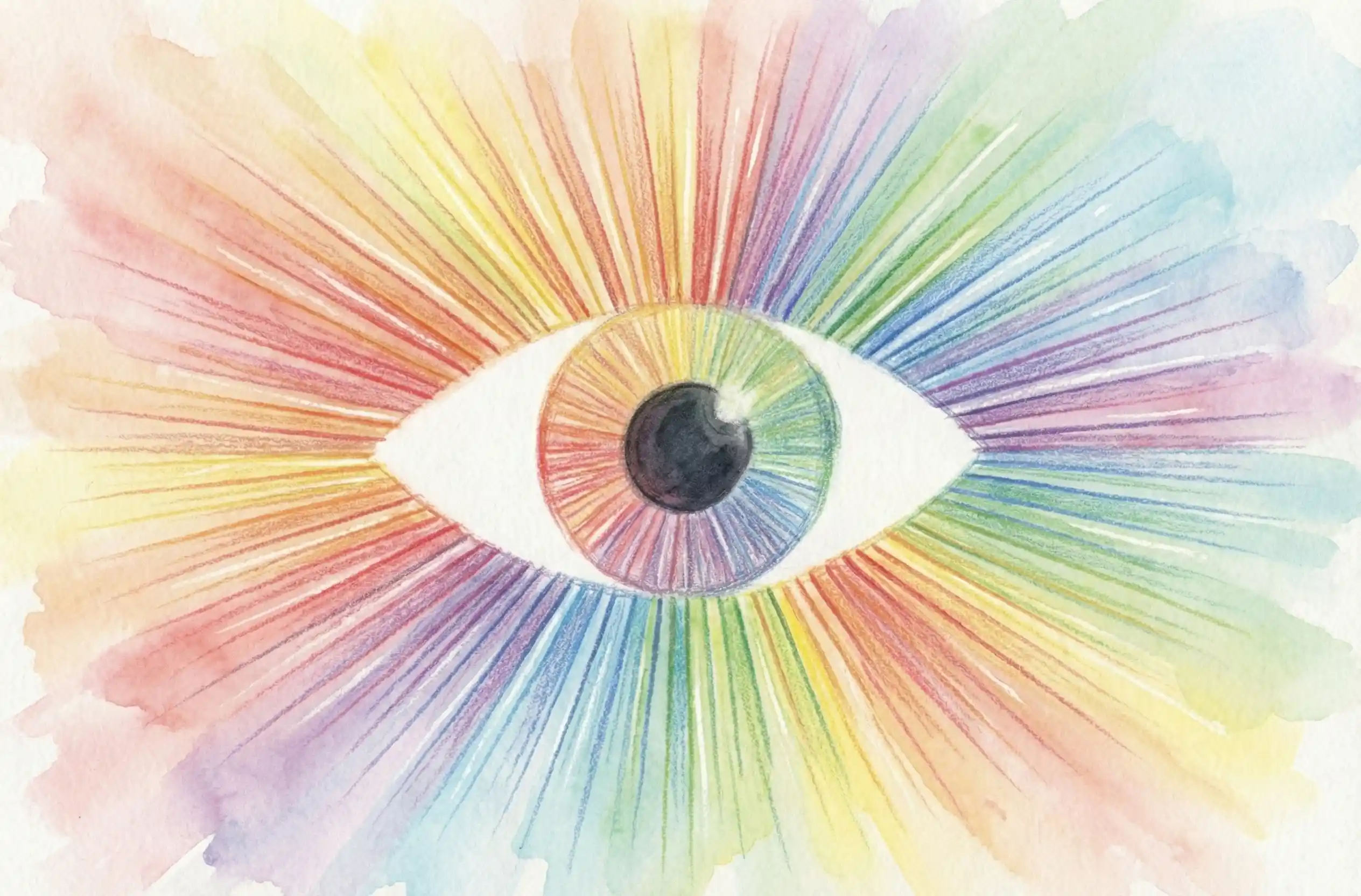
In the world of eLearning, “Make it pop” is a request we hear too often. It implies that visual design is merely the wrapper—a coat of paint applied after the hard work of content creation is done.
This is a dangerous misconception.
Visual design is not decoration; it is communication. It is the non-verbal language that dictates how a learner processes, retains, and applies information. When we talk about aesthetics in learning, we aren’t talking about making things “pretty.” We are talking about reducing cognitive load, directing attention, and triggering the right emotional cues for learning to stick.
Here is how to stop decorating and start designing.
Every pixel on your screen carries psychological weight. Your learners’ brains are decoding these visual cues instantly, long before they read the first word of text.
1. Color: The Emotional Short-Cut Colors are not arbitrary. They are biological signals.
2. Shapes: The Subconscious Guide Shapes influence how we perceive the “personality” of the content.
3. Typography: The Tone of Voice If your content is the speech, your font is the accent.
If visual elements are the instruments, the layout is the conductor. A chaotic layout creates “visual noise,” which forces the brain to work harder just to figure out where to start. This is wasted cognitive energy.
To fix this, you must master Visual Hierarchy.
Hierarchy is the art of telling the learner’s eye exactly where to look: First, Second, Third. You achieve this through:
Aesthetics also serve accessibility. High contrast ratios, clear font choices, and logical layouts don’t just help those with visual impairments; they help everyone. A course that is easy to see is a course that is easier to learn.
Visual design is a pedagogical tool. It uses diagrams to decode complexity, flowcharts to map logic, and metaphors to bridge knowledge gaps.
As learning designers, we must stop viewing aesthetics as an artistic endeavour and start viewing it as a strategic one.
Whether you need a team critique or 1:1 mentorship, book a coaching session with me to master the aesthetics of learning.