Cath Ellis Learning Design Logo

The Mechanics of Motivation

Gamification is more than leaderboards, and interaction is more than clicking “Next.” Discover how to use game thinking and immersive tech to turn passive observers into active, motivated learners.

Reading Time: mins

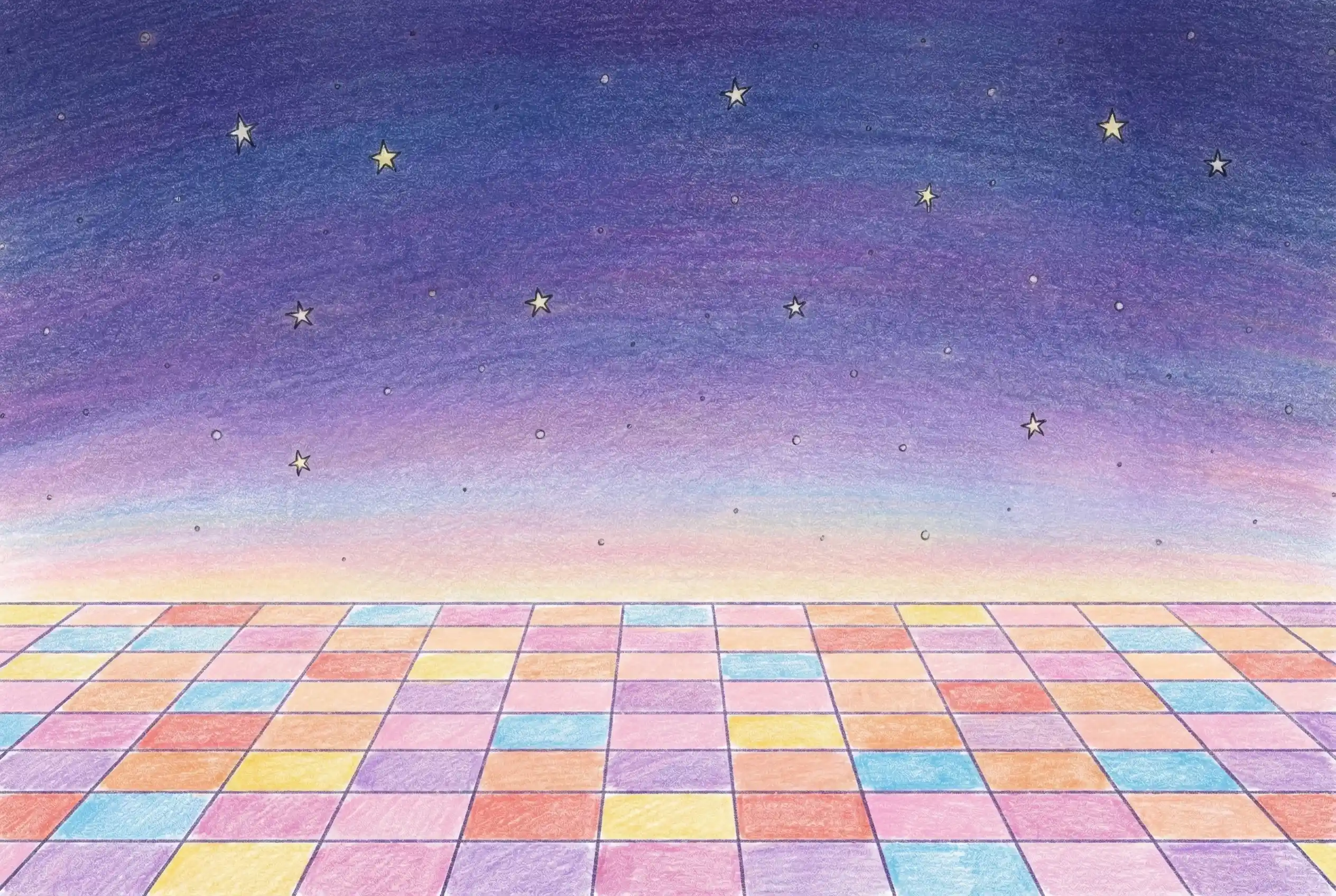
A colorful, checkered floor leads to a horizon with a gradient sky at dusk, dotted with stars—evoking the engaging spirit of gamification in elearning environments.

“Gamification” has become the buzzword of the decade. But if you strip away the hype, the leaderboards, and the shiny gold stars, what is actually left?

Too often, we see “gamified” learning that is nothing more than a multiple-choice quiz dressed up in a space theme. That isn’t design; it’s decoration.

True gamification isn’t about tricking people into learning by dangling a digital carrot. It is a pedagogical strategy rooted in psychology. It is about taking the elements that make games addictive—purpose, autonomy, and mastery—and applying them to the learning journey.

Here is how to move beyond the buzzwords and start designing for genuine engagement.

Gamification: Beyond the “Badge”

If your gamification strategy relies entirely on points, you are relying on extrinsic motivation. That fades fast. To create lasting engagement, you need to leverage Game Thinking, not just Game Mechanics.

  • It’s about Progression: Learners need to feel they are leveling up their skills, not just their score. Show them the path from Novice to Master.
  • It’s about Stakes: In a game, losing a life matters. In eLearning, safe failure is crucial. Give learners the space to get it wrong, face the (simulated) consequences, and try again.
  • It’s about Narrative: Don’t just ask a question; create a quest. Context transforms a boring “task” into a meaningful “mission.”

Interaction Design: The Difference Between “Clicking” and “Thinking”

There is a massive difference between physical interactivity and cognitive interactivity.

  • Physical Interactivity: Clicking “Next,” hovering over a tooltip, or a simple drag-and-drop. This proves the learner is awake, but not necessarily that they are thinking.
  • Cognitive Interactivity: Making a decision, solving a problem, or diagnosing a fault.

The Rule of Thumb: If a learner can click through your interaction without reading or understanding the content, it is a failed interaction.

Effective interaction design uses the interface to challenge the brain. It demands attention. Whether it’s a complex branching scenario or a simple “spot the hazard” exercise, the interaction must serve the learning goal. It is not a distraction; it is the vehicle for the lesson.

The New Frontier: VR, AR, and Immersive Tech

We are standing on the precipice of a new era in interaction.

  • Virtual Reality (VR): This is the ultimate “safe failure” environment. VR allows a learner to practice high-risk tasks, like operating heavy machinery or de-escalating a hostile client, without real-world risk.
  • Augmented Reality (AR): This brings learning into the flow of work. Imagine a mechanic pointing a tablet at an engine and seeing the repair schematics overlaid in real-time.

These aren’t just flashy novelties. They are tools that remove the abstraction of the classroom and place the learner directly inside the experience.

The Bottom Line

Whether you are using a simple drag-and-drop interaction or a high-end VR headset, the goal remains the same: User-Centric Design.

Technology is just the delivery method. The psychology of the learner, their need for relevance, feedback, and achievement, is the constant.

The game of learning design is on. Don’t just play to participate; play to engage.

Ready to level up your learning design?

If your courses feel more like a chore than a challenge, it’s time to rethink your strategy. Book a coaching session with me, and let’s build a learning experience that your users actually want to play.


Trusted by global brands, government agencies, and industry leaders:

Ready to create something exceptional?

I accept a limited number of projects to ensure every client gets my full attention. Let’s chat about what you need.
Cath Ellis Learning Design Logo
I acknowledge the Wurundjeri People of the Kulin Nation as the Traditional Custodians of the Country on which I live and work.
I honour their enduring connection to land, waters, skies, and community, and pay my deepest respects to Elders past and present, and extend that respect to emerging leaders.
I recognise that sovereignty was never ceded. This always was, and always will be, Aboriginal land.

About Cath Ellis

Cath Ellis is an eLearning Designer and Developer based out of Melbourne, crafting engaging and effective learning experiences.
ABN: 32 316 313 079
A Queer-Owned Business

Contact Info

Join My FREE Community

Sign up for my community to enjoy free eLearning tips, inspiration, and more.
©
2026
Cath Ellis
Made with
in Melbourne